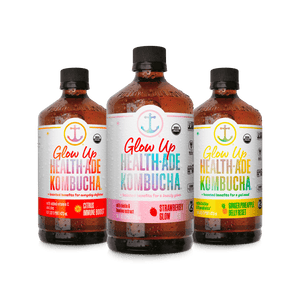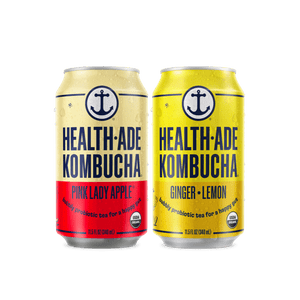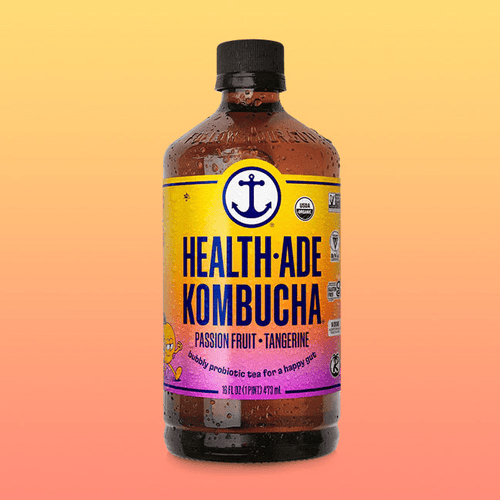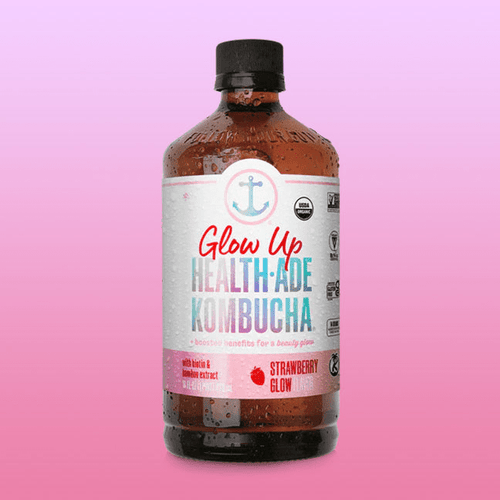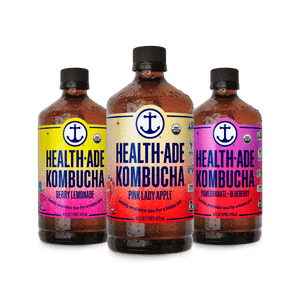
Kombucha | 12 Pack
Fan Favorite Variety Pack
One-time Purchase
49.95


Getting to know your gut should be simple, so we broke it down. No textbook required.

From the farmers market brewers to experts in gut health, get the full story.

We’re working hard to grow our sustainability efforts year over year.

Hear from nutritionists, wellness pros, and our very own team of experts on the blog.

Copied URL to clipboard!
You know the feeling. A big deadline hits, a difficult conversation looms, life just piles on, and suddenly your stomach is in knots. Maybe you’re bloated for no obvious reason. Maybe your digestion feels completely off. Maybe you’re running to the bathroom more than usual.
That’s not a coincidence but rather, your body telling you something. Stress doesn’t just live in your head, it also shows up in your gut with measurable, physical consequences. The good news is that by understanding those consequences, you can actually doing something about it.
This isn't a blog about mindfulness or breathing exercises (though we're not against either). This is a look at what stress physically does to your digestive system — and the tangible, gut-first habits that can help.
When you encounter a stressor, whether real or perceived, your body activates the hypothalamic-pituitary-adrenal (HPA) axis. It’s your internal alarm system, and its job is to prepare you to respond. Part of that response is flooding your bloodstream with cortisol, your primary stress hormone.
Cortisol is useful in short bursts. But when stress is chronic — the kind that doesn’t resolve after a meeting ends or a deadline passes — cortisol keeps circulating. And your gut bears a significant part of the burden.
Here’s what the research shows is happening:
The bottom line: stress doesn’t just make you feel bad. It actively changes the physical environment inside your gut.
One of the more frustrating things about the stress-gut connection is the lag. You might feel fine mentally as the initial stressor has passed but your gut is still catching up.
That’s partly because chronic stress changes gut microbiota composition over time, not just in the moment. It’s also because the stress response affects food choices: research shows that people under stress tend to reach for higher-fat, higher-sugar foods and those dietary shifts compound the gut disruption already underway.[5]
It’s a loop: stress disrupts the gut, a disrupted gut makes you more reactive to stress, and a more reactive stress response compounds the gut disruption. Breaking that loop requires working on both the gut and the stress.
Here’s where we get practical. You can’t always eliminate the stressor but you can build habits that support your gut’s resilience when stress inevitably shows up.
Stress is physical. Your gut feels it in real, measurable ways from how food moves through you, to how your gut lining holds up, and the diversity of the microbiome doing its job every day. Understanding that connection isn’t meant to add another thing to your stress list. It’s meant to give you a clearer picture of why the small, consistent gut-friendly habits actually matter.
Your gut is resilient. Feed it well, move your body, protect your sleep, and give it something worth sipping. It’ll handle the rest better than you think.
Start with a Health-Ade Kombucha. Your gut will thank you.
Sources
[1] Journal of Applied Physiology (2025) — Exploring the complex relationship between psychosocial stress and the gut microbiome
[2] The Journal of Physiology (2023) — The impact of acute and chronic stress on gastrointestinal physiology and function
[3] PMC / NIH (2024) — Stress in the microbiome-immune crosstalk
[4] PMC / NIH (2022) — The influence of perceived stress on the human microbiome
[5] PMC / NIH (2020) — Stress, depression, diet, and the gut microbiota

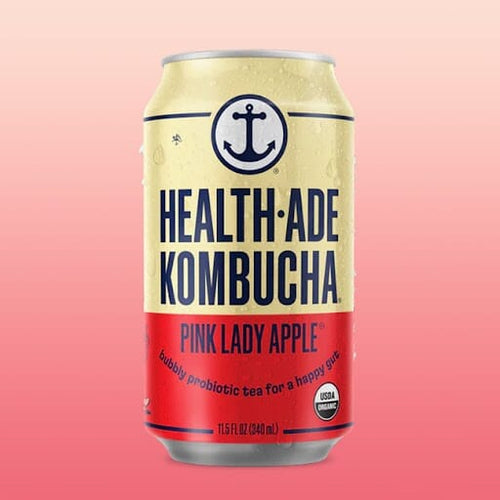
Apple cider season, meet your new best friend. Fresh cider and bubbly Pink Lady Apple Kombucha ov...
Read more
Fixing your sleep and supporting your gut are more connected than they sound. The relationship ru...
Read more
This is the mocktail fall didn't know it needed! Fresh blood orange and lime get muddled with jal...
Read more