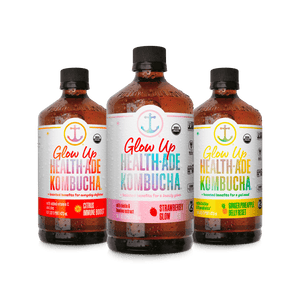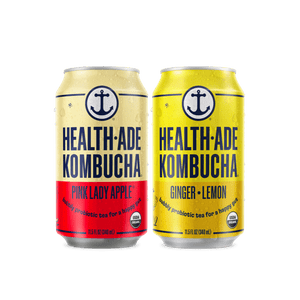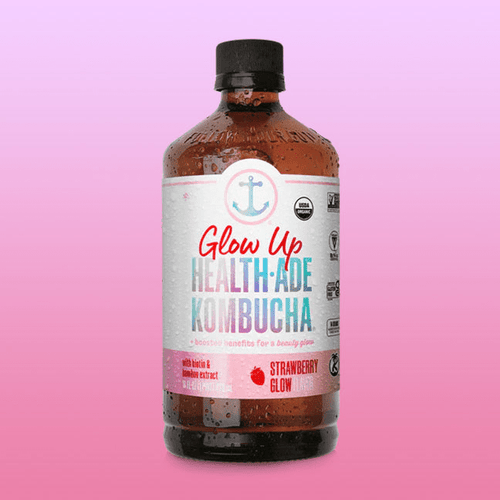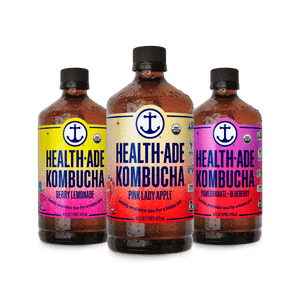
Kombucha | 12 Pack
Fan Favorite Variety Pack
One-time Purchase
49.95


Getting to know your gut should be simple, so we broke it down. No textbook required.

From the farmers market brewers to experts in gut health, get the full story.

We’re working hard to grow our sustainability efforts year over year.

Hear from nutritionists, wellness pros, and our very own team of experts on the blog.

Copied URL to clipboard!
This time of year has a particular energy to it. Summer loosens everything up, and then the calendar tightens back down. School is back, work picks up, the days get shorter, and a lot of us start thinking seriously about getting back on “a schedule”.
Sleep is usually near the top of that list. Worth knowing before you start: fixing your sleep and supporting your gut are more connected than they sound. The relationship runs in both directions, and understanding it makes a routine reset a lot more effective.
Yes, and more directly than most people expect. Your digestive system runs on a clock. Every part of the GI tract shows circadian rhythm, from how food moves through you to the composition of your gut microbiome.[4]
That means digestion is not a constant and it changes across the day by design. Stomach and small bowel movement slow down at night, and gastric emptying is slower in the evening than it is in the morning.[4] Your gut is built to expect a rhythm.
When sleep gets irregular, that rhythm gets scrambled, and digestion is usually one of the first places you notice it. If you have ever had a stretch of bad sleep and found yourself feeling off, that connection is real.
Sleep quality shows up in the makeup of your gut microbiome.
The largest study on this to date looked at 6,941 people through the Lifelines Dutch Microbiome Project. It found that lower microbiome diversity was associated with poorer sleep quality, a later chronotype, and greater social jet lag, which is the gap between your weekday and weekend sleep schedules. Researchers identified 137 bacterial species associated with sleep characteristics.[1]
Diversity matters here because a more diverse microbiome is generally considered a more resilient one. Research has also found that even a short-term shift in your sleep and wake cycle can change the gut microbial community.[5] You do not need months of bad sleep for your gut to register it.
That last one is worth sitting with, because social jet lag is exactly what a summer of late nights and rowdy weekends tends to produce.
The relationship goes both ways.
Researchers describe the connection between sleep and the gut microbiome as bidirectional, meaning each one influences the other.[1][3] Poor sleep can shift your microbiome, and your microbiome composition is in turn associated with sleep quality and duration.
The mechanisms are still being mapped, but researchers have pointed to microbial metabolites, including short-chain fatty acids like butyrate, as one of the pathways through which gut bacteria may influence sleep.[2] Short-chain fatty acids are produced when gut bacteria break down fiber, which is one more reason fiber earns its place in your routine.
To be clear, tending your gut will not fix your sleep. What it will do is pull in the same direction, so the effort you put into one tends to support the other.
Circadian rhythm responds to consistency. That is really the whole principle behind a routine reset, and the back-to-schedule stretch after summer gives you a natural excuse to build one.
The factors that throw your internal clock off are the ones that pile up over summer: irregular routines, inconsistent eating times, and late-night light exposure. The fix is not complicated, but it does require repetition. Regular sleep and wake times, regular meal times, morning light, and a wind-down you actually repeat.
Your gut is on the same clock, which means a reset that works for your sleep is generally working for your gut too.
None of this requires a full overhaul. A few habits do most of the work.
Not as a sleep aid. As an anchor habit.
A routine reset only works if the pieces are repeatable, and the easiest habits to keep are the ones attached to something you already do. That is the useful role for kombucha here.
Health-Ade Kombucha is a bubbly fermented tea with living probiotics and organic acids that support gut health. Whether you make it part of your morning, your afternoon, or your evening wind-down, the value is the consistency. From what fans tell us, drinking Health-Ade daily is a great way to stay refreshed and feeling good. Try it for 7 days and see how you feel.
Worth keeping in mind that kombucha works best as one part of a bigger picture, alongside a varied diet, fiber, sleep, and movement, rather than a fix on its own. No single food does the work by itself.
One practical note if you are rebuilding your evening routine: our kombucha is brewed with organic green and black teas, so there is a small amount of naturally occurring caffeine. If you are sensitive to caffeine late in the day, earlier is the easier call.
Sleep and gut health are not two separate projects. They run on the same clock, they influence each other in both directions, and the habits that support one tend to support the other.
So, if you are using this stretch of the year to get back on a schedule, you are already doing your gut a favor. Keep your wake time steady, get some morning light, eat at roughly regular times, and give your gut something worth sipping while you are at it.
Shop Health-Ade Kombucha and find us in the refrigerated section at your nearest retailer. And if you want to go deeper on the gut science, Gut Health 101 breaks it down without the textbook.
Sources
[2] American Society for Microbiology (2026): Can't Sleep? Your Microbiome May Play a Role
[6] Health-Ade: Gut Health 101
This content is for informational purposes only and is not intended as medical or nutritional advice. Always consult a healthcare professional with questions about your health.

This is the mocktail fall didn't know it needed! Fresh blood orange and lime get muddled with jal...
Read more
Warm spice meets bright citrus in this cozy-meets-refreshing mocktail. Fresh orange and lemon get...
Read more
This bright, fruity refresher blends fresh blueberries, lemon, and berry juice with classic lemon...
Read more